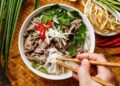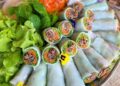
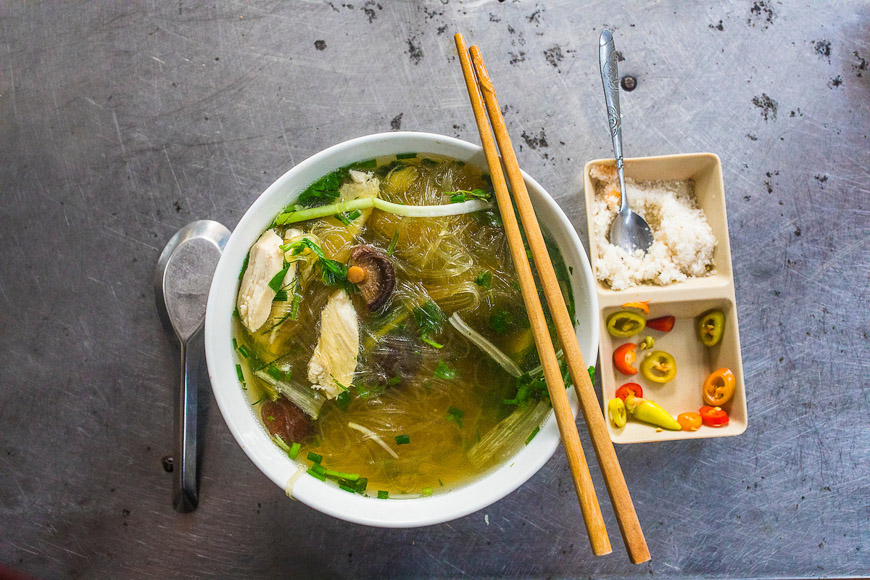

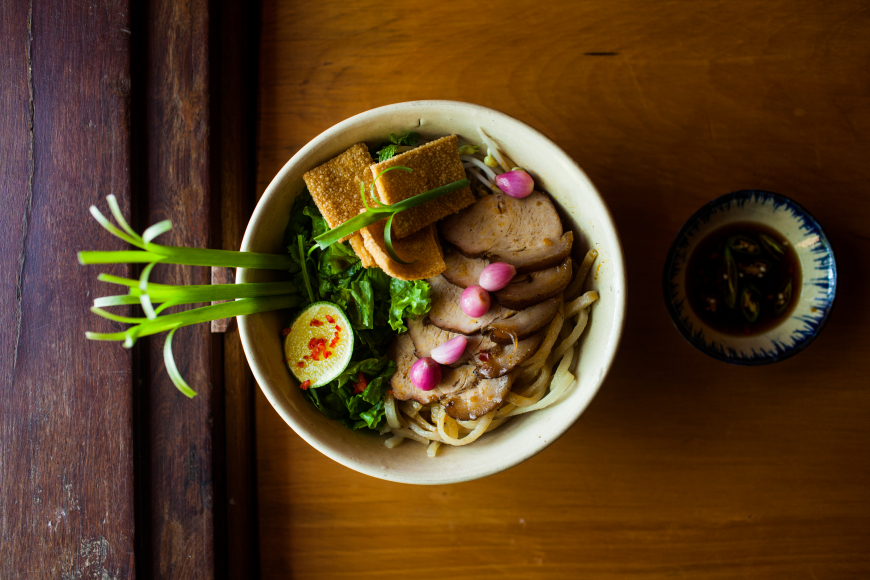


When international travelers think of Vietnamese cuisine, the mind instantly conjures images of a steaming bowl of traditional Pho—a rich, aromatic noodle soup that has become a global ambassador for the country. However, in the heart of Hanoi, specifically nestled around the serene waters of Truc Bach Lake, a modern classic was born out of a moment of culinary ingenuity: Pho Cuon (Pho Rolls).

If traditional Pho is a warm, comforting embrace, Pho Cuon is its cool, sophisticated, and vibrant cousin. For friends from across the globe looking to explore the depth of Vietnamese flavors, Pho Cuon offers a refreshing perspective on how tradition can evolve into something entirely new yet remains deeply rooted in heritage.
1. The Story of an “Accidental” Masterpiece
Every great dish has a legend, and Pho Cuon is no exception. Its origin story is a testament to the resourcefulness of Vietnamese street food vendors. As the story goes, in the late 20th century, a Pho vendor in Hanoi ran out of broth late at night. A hungry customer arrived, but instead of turning them away, the vendor took the large, uncut sheets of steamed rice noodles (Bánh Phở), filled them with stir-fried beef and fresh herbs, and rolled them up.
The result was an instant sensation. This “dry” version of Pho captured all the essential flavors of the original soup but transformed them into a handheld, finger-food experience. It was light, fresh, and perfect for the humid climate of Hanoi. Today, the Ngu Xa village area near Truc Bach Lake has become the “Mecca” of Pho Cuon, where dozens of restaurants serve thousands of rolls daily to locals and tourists alike.

2. The Anatomy of a Perfect Pho Cuon
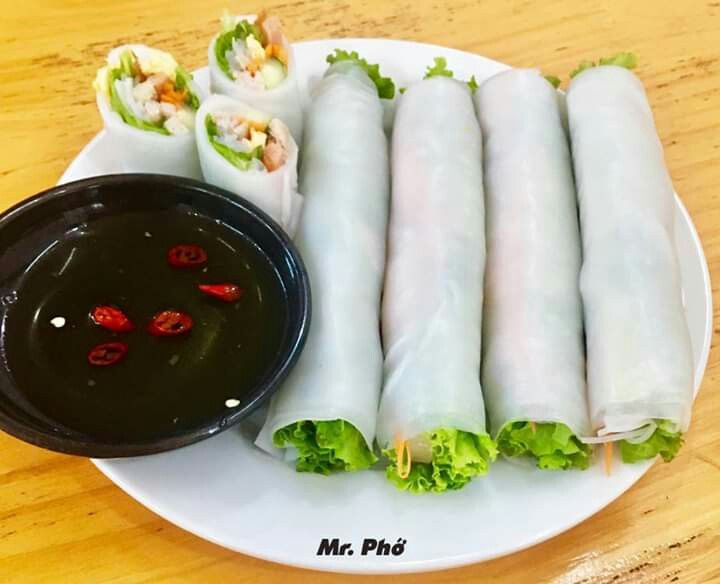
To the untrained eye, Pho Cuon might look like a simple spring roll, but the secret lies in the specific textures and the harmony of ingredients that mirror the soul of traditional Pho.
The “Wrapper”: The Silky Rice Sheet
Unlike the thin, dried rice paper used in Goi Cuon (Summer Rolls), Pho Cuon uses fresh, thick sheets of steamed rice batter. These sheets are the same material used to make Pho noodles but are kept whole. They are incredibly soft, slightly chewy, and have a pristine white color. The quality of the roll depends entirely on the freshness of this sheet—it must be silky enough to melt in your mouth but strong enough to hold the fillings.
The Filling: Searing Heat Meets Fresh Earth
The core of the roll consists of two main elements:
-
Stir-fried Beef: High-quality beef is thinly sliced and flash-fried over a high flame (wok-hei) with plenty of garlic. This adds a savory, smoky depth that replaces the richness of the traditional Pho broth.
-
Fresh Aromatics: A bouquet of Vietnamese herbs is tucked inside. This usually includes crisp lettuce, cilantro, and, most importantly, Vietnamese Balm (Kinh Giới) and Thai Basil. These herbs provide a citrusy, peppery contrast to the savory beef.
The Dipping Sauce: The Ultimate Bridge
In Vietnamese cuisine, the sauce is often the “soul” of the dish. The dipping sauce for Pho Cuon is a refined version of Nuoc Cham. It is a delicate balance of premium fish sauce, vinegar (or lime juice), sugar, and water, garnished with minced garlic, fresh chili, and thin slices of pickled green papaya and carrots. This sauce provides the acidity and sweetness that ties the smoky beef and the cool rice sheet together.

3. A Sensory Experience: Why You Will Love It
For international visitors, Pho Cuon represents the “Yin and Yang” balance that defines Vietnamese gastronomy.
-
Texture: You experience the soft, velvet-like texture of the rice sheet, followed by the crunch of fresh lettuce, and finally the tender, juicy bite of garlic-infused beef.
-
Temperature: The contrast between the warm, freshly sautéed beef and the cool, room-temperature rice sheet and herbs makes it an incredibly dynamic dish to eat.
-
Lightness: Unlike heavy, cream-based Western appetizers or deep-fried snacks, Pho Cuon is remarkably healthy. It is gluten-free (using rice flour), low in fat, and packed with fresh greens.
4. How to Eat Pho Cuon Like a Hanoian
Eating Pho Cuon is an informal, communal affair. Here is how you do it:
-
No Chopsticks Required: While you can use chopsticks, Pho Cuon is traditionally a finger food. Pick it up gently with your hands to feel the texture of the rice sheet.
-
The Dip: Submerge about half the roll into the dipping sauce. Make sure to catch a piece of the pickled papaya or carrot on top of the roll before taking a bite.
-
The Sidekicks: Pho Cuon is rarely eaten alone. In Hanoi, it is almost always accompanied by Phở Chiên Phồng (Deep-fried puffed Pho squares) or Phở Chiên Trứng (Pho noodles fried with egg). These crispy dishes provide a delightful textural counterpoint to the soft rolls.
5. Beyond the Plate: A Cultural Icon
Pho Cuon is a symbol of Hanoi’s “New Heritage.” It shows that Vietnamese culture is not static; it is a living, breathing entity that adapts to the times. For the younger generation in Hanoi, meeting up for Pho Cuon at Truc Bach is a weekend staple. It represents a transition from the formal, quiet breakfast bowl of soup to a social, sharing-oriented dining culture.
For global foodies, Pho Cuon is proof that the most famous flavors in the world can be reinvented without losing their essence. It carries the “Beef-Ginger-Onion” DNA of Pho but presents it in a way that is modern, chic, and incredibly addictive.

6. Where to Find the Best Pho Cuon
If you find yourself in Hanoi, head straight to Ngu Xa Street.
-
Phở Cuốn Hương Mai: Perhaps the most famous and professionalized establishment, perfect for those who want a consistent, high-quality experience.
-
Phở Cuốn Hưng Bền: One of the pioneers of the dish, offering a more rustic and authentic street-side atmosphere.
7. A Message to Our International Friends
We invite you to step beyond the bowl. While the world knows Vietnam for its soup, those who truly seek to understand the heart of Hanoi will find it in a roll of Pho Cuon. It is a dish that speaks of innovation, freshness, and the joy of sharing a meal with friends by the lakeside.
When you take your first bite of Pho Cuon, you aren’t just tasting a snack; you are tasting the creativity of a city that knows how to honor its past while embracing the future.
Welcome to Vietnam, and enjoy your Pho Cuon!